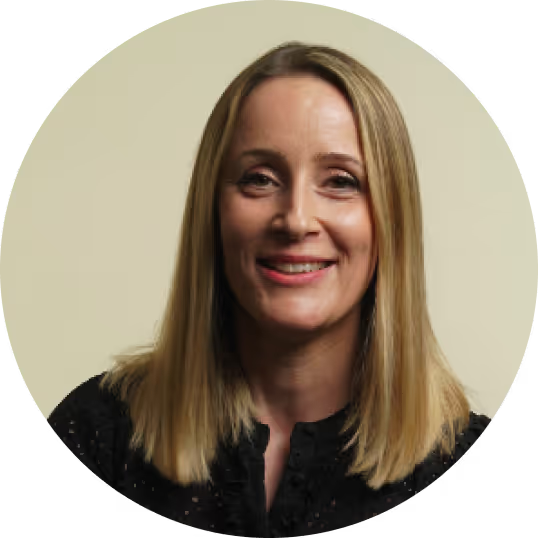
By Jo Lenz, Registered Dietitian (HCPC registered), in conversation with Mulu, founder of V&M
Eating is a very complex skill to learn. Registered dietitian Jo Lenz compares it to walking: children get endless opportunities to get up, fall down and practise walking, yet we expect them to be able to eat from the get go. Texture progression is the practice ground for that skill, and getting it right shapes far more than what is on the plate, from how a child manages family food at 12 months to their relationship with mealtimes for years afterwards. Here is the bigger picture, from Jo's conversation with V&Me founder Mulu.
Eating is a skill, and skills need practice
Jo's walking comparison deserves sitting with. Feeding is a very complex skill to learn, built with repeated starts and stops and, in her words, fails. It is not an easy journey. Some children have easy journeys and other kids do not, and neither reflects on the parent. What every child needs is the same thing a child learning to walk needs: repeated opportunities to practise. In feeding, those opportunities are textures, offered regularly, at every meal, across every week.
That is why the evidence Jo cites matters so much: delaying more textured foods beyond around 9 to 10 months is linked with more feeding difficulties as children get older. Skip the practice window and the skill is harder to build later.
The muscles doing the work
Even before teeth arrive, a baby managing texture is doing real physical work: hard gums, strong jaw muscles and a tongue squashing food against the roof of the mouth. Every lump, every finger food, every piece of soft cooked vegetable is a workout for the structures a child will use for eating throughout life. The NHS makes the same point in its weaning guidance, noting that chewing develops the muscles used for eating and speech, which is one of its stated reasons for moving babies onto mashed, lumpy and finger foods as soon as they can manage them.
Free texture progression guide download
A simple guide designed by Jo Lenz, ready to be printed and stuck to the fridge.
Self feeding and independence
Texture experience is also what unlocks self feeding, and Jo recommends encouraging it as early as possible. Babies who are used to picking things up and taking them to their mouths transfer that to food, and the more you allow self feeding, mess and all, the more those skills build. Mulu described the difference it made in her own house: once her boys could feed themselves, mealtimes changed. She could stop watching every swallow, get on with her own food, and let them get on with theirs. Jo adds that this is better for the baby too. Being stared at the entire time you eat is quite off putting, and a parent eating their own meal alongside is actually a really good experience for a child to watch and learn from.
Mealtimes, confidence and the social side of food
The conversation kept returning to the emotional layer. Babies pick up on tension, body language and anxious eyes at the table, and a calm, low pressure mealtime is part of what lets a child practise freely. Eating together helps, and Jo notes that when little ones start nursery, watching all those other children eat can genuinely move some babies forward. Food is social, and texture confidence is built in company. How to tell the practice is working is covered here.
The V&Me view
This is why texture sits at the centre of everything we cook. Meals made fresh each morning in our Battersea kitchen, in staged textures with a different meal every day, are daily practice for a skill your child keeps for life, delivered across London. See our texture options here.
FAQs
Q: Why does texture progression matter so much?
A: Eating is a complex learned skill, like walking, and textures are the practice. Delaying textured foods beyond around 9 to 10 months is linked with more feeding difficulties as children get older.
Q: Does chewing help development beyond eating?
A: Managing textures works the gums, jaw muscles and tongue, and NHS weaning guidance notes that chewing develops the muscles used for eating and speech.
Q: Why is self feeding important?
A: It builds independence and skill, makes mealtimes calmer for everyone, and lets your baby learn by watching you eat alongside them rather than being watched.
This article is based on a recorded conversation between Jo Lenz, registered dietitian, and Mulu, founder of V&Me, with reference to NHS weaning guidance. It is general guidance, not a substitute for individual medical advice. If you are concerned about your baby's feeding, speak to your GP, health visitor or a paediatric dietitian.
Jo Lenz is a registered dietitian with 19 years of experience, including 13 years in the NHS, and has worked with V&Me since it began. V&Me cooks fresh baby and toddler meals every morning in its Battersea kitchen and delivers across London.