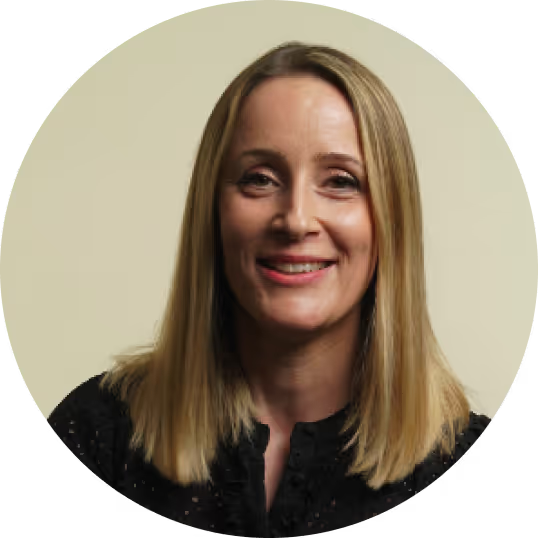
By Jo Lenz, Registered Dietitian (HCPC registered), in conversation with Mulu, founder of V&Me · Published July 2026
Family food at 12 months means just normal meals: normal breakfasts in low sugar varieties, balanced lunches and evening meals, the food the rest of the family eats, still adapted to be low in salt and sugar for young children. It is the end goal of the whole weaning journey, and the ideal registered dietitian Jo Lenz sets out is that by 12 months your baby is accepting family foods, having spent the six months from the start of weaning gradually working there. When V&Me founder Mulu asked her what family style food actually means, this was her answer.
The definition, unpacked
Mulu pushed on this in the conversation because "family food" is one of those phrases everyone uses and nobody defines. Jo's definition is refreshingly ordinary. Normal breakfasts, in low sugar varieties. Balanced meals for lunch and the evening meal. The overall way of thinking about it is moving away from typical baby foods and purées and onto the normal meals you would be eating yourself with the rest of your family. It is still maybe adapting certain meals, keeping salt and sugar low for young children, but the direction is unmistakable: off the baby food track and onto the family plate.
Free texture progression guide download
A simple guide designed by Jo Lenz, ready to be printed and stuck to the fridge.
Why 12 months is the aim
Because the whole progression is built backwards from it. In Jo's words, by 12 months the aim or the ideal situation would be for them to be accepting family food, so you have to try and get to that stage within those first six months. If you stay on a purée for too long, it is going to be harder to reach that end goal. That is why the path runs the way it does: thickening purées after the first two weeks, two meals a day around 7 months, three by 8 to 9 months, lumps established before the 9 to 10 month window, family food by 12. The full map is here.
Variety is half the destination
Texture is important in the progression, but so is variety, and Jo pairs them deliberately. Not sticking on one thing for too long. If you are working up to feeding three times a day and offering different foods at those times, your baby gets an enormous amount of experience over those six months of trying different tastes and textures. That experience is what makes family food land at 12 months: by then, different textures, different flavours and different meals are simply normal.
Practical signs you have arrived
- Your baby eats adapted versions of what you cook, rather than separate baby meals.
- Three regular meals a day, with a variety of foods across the week rather than a repeated rotation.
- Textures are no longer the obstacle: soft cooked family food, mashed or in pieces, is managed with gums, jaw and tongue.
- Mealtimes happen together where possible, because eating with your child and letting them watch you eat is a really good experience for them.
The bridge to the family plate
This is what our toddler menu is: normal, balanced meals cooked fresh each morning in our Battersea kitchen, low salt, no added sugar, a different meal every day, delivered across London. Family food, without the planning. See our toddler menu here.
FAQs
Q: What is family food for a 12 month old?
A: Normal meals: normal breakfasts in low sugar varieties, balanced lunches and dinners, adapted to be low in salt and sugar. The same food as the rest of the family, not separate baby food.
Q: When should a baby stop eating purées?
A: Purées should be thickening from the first weeks of weaning, with textured food established before 9 to 10 months and family food the aim by 12 months. Smooth foods like yoghurt can stay in the diet indefinitely.
Q: Does my 1 year old need special toddler food?
A: No. The ideal at 12 months is adapted family meals with low salt and sugar and plenty of variety across the week.
This article is based on a recorded conversation between Jo Lenz, registered dietitian, and Mulu, founder of V&Me. It is general guidance, not a substitute for individual medical advice. If you are concerned about your baby's feeding, speak to your GP, health visitor or a paediatric dietitian.
Jo Lenz is a registered dietitian with 19 years of experience, including 13 years in the NHS, and has worked with V&Me since it began. V&Me cooks fresh baby and toddler meals every morning in its Battersea kitchen and delivers across London.